The original team of Suzie Miller’s Olivier Award-Winning play, Prima Facie, return to Sydney for another reminder of the text’s stunning relevancy.
Prima facie: from Latin prīmā (“first”) faciē (“shape or figure”), literally “at the first appearance.” Written by Australian playwright and human rights lawyer Suzie Miller, Prima Facie is a one woman show that examines how our legal system is structurally biased against the victim in rape trials.
Prima Facie is a call to arms. It’s a plea for change and it speaks such a universal truth that it’s been translated into more than thirty languages and performed in more than fifteen countries since it premiered in 2019 in Sydney. Partnering with charities and organisations, the global success of Prima Facie has funded consent education workshops for students around the world – a live recording of the play is now mandatory viewing for the High Court bench in Northern Ireland. After seeing the play, a senior British judge rang Miller to let her know that she had rewritten the direction that judges read out to the jury in rape cases to include that, “just because someone doesn’t remember something perfectly, it doesn’t mean they’re lying”.
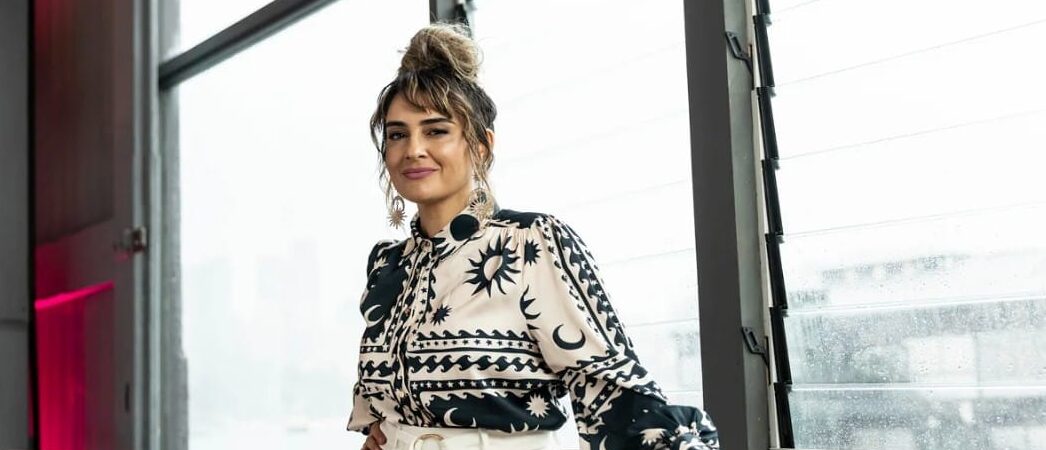
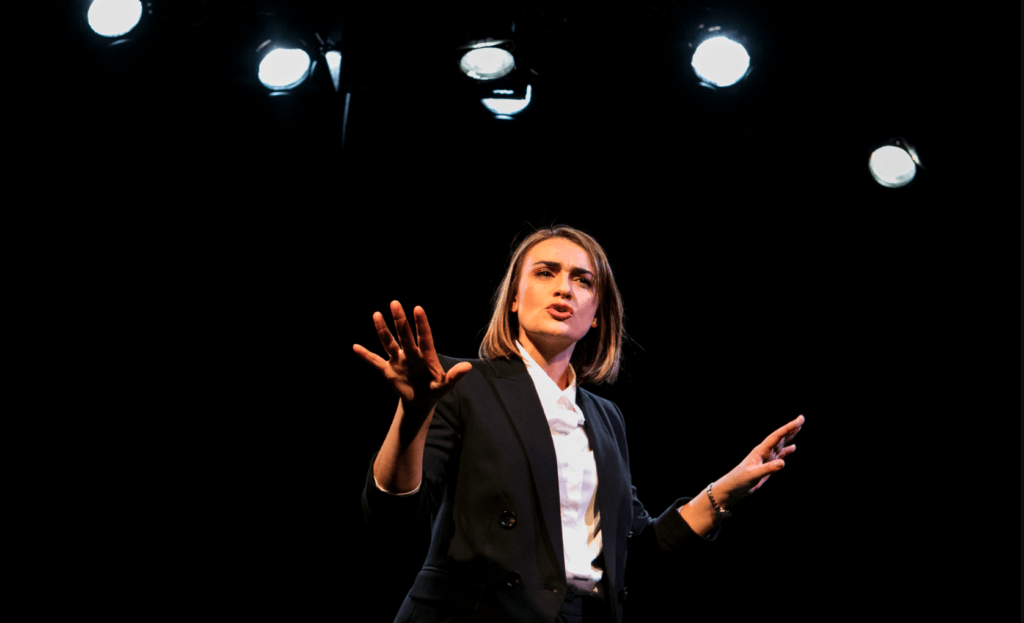
After so many performances nationally and internationally, Andrew Henry Presents brings the original creative team of the Olivier Award-winning play back for a 2026 return season. Theatre Thoughts were lucky enough to speak with the very much in-demand Sheridan Harbridge – the originator of the role of Tessa – who is currently in her last performances of the Melbourne season.

When you read the play for the first time, did you have any idea that it was going to blow up the way that it has?
“Absolutely not, and that’s not testament to the piece – but more testament to how political theatre has weight. To have something that did really start to become a part of the conversation, it was the first time I’d seen that in my lifetime. That felt really special to be a part of.”
Harbridge spoke about how art and particularly theatre, can be used as powerful medium for connection and education, and how Prima Facie brings the issue plainly and directly into an accessible, fact-based form. “I think sometimes when you want to take on something like this with a work of art, you can censor yourself because you think it needs to answer every question and it needs to be perfect and fulfil a lot of people’s needs. Whereas this has really taught me that the very fact of talking about something, and it being an open question and not answering every single thing and tying it up in a bow, has proven more powerful for me than it being a neat and packaged provocation.”
There have been reviews that are prone to saying the piece doesn’t really say anything new. To that, Sheriden says “It’s actually not saying things that people didn’t already know, but it’s bringing it to the forefront of people’s minds and challenging them to think about how there is something we can change here, that it is not perfect.
The argument is not new, but for the majority – for 98% of the audience coming to see it – they’ve never been asked questions about the legal system before. And then there’s the statistic that comes up in the play which is that 1 in 3 women are sexually assaulted – and that remains true.”
Harbridge presents as so in tune with the text, so full of facts and figures that you feel drawn to her as much in real life as on stage. “I read something the other day that reported sexual assault is increasing by 8% every year. Are there more sexual assaults happening? or are people feeling more supported to report? I don’t know the answer to that. Either way, it’s still awful that it grows and doesn’t shrink. There are people who need to see the play and see their story highlighted as important and extraordinary. That’s what the show is for. It’s not about new arguments. It’s actually about going, ‘we’ve got an ancient problem. that we’re still not addressing’”.
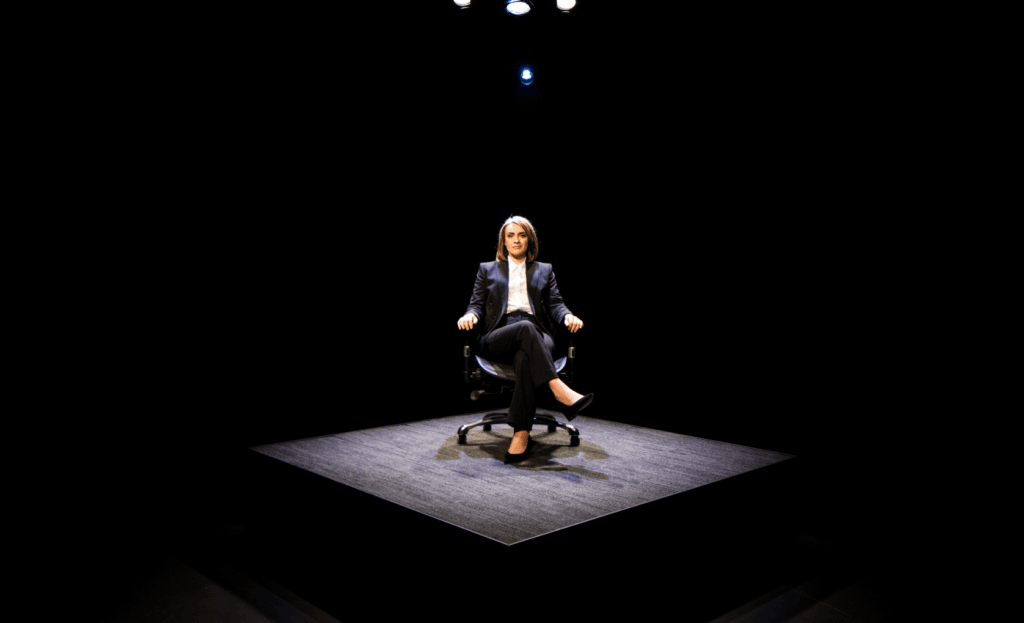
Often, the process of reporting can be deeply traumatic and devastating, and can become a big element of the trauma associated with the event. Politicians don’t seem to care to prioritise the reduction or elimination of sexual violence in Australia, and I don’t think we can pretend it’s not a problem close to home. I was interested to hear whether Sheridan has felt a change since the 2019 production from both an audience reception perspective and her own approach to the work.
“It’s now been seven years since I started on this work. The biggest thing I’ve felt – which is sort of a strange thing to try and articulate – is when we first staged it, we had a real bright eyed, bushy tailed kind of optimism. The #MeToo movement was just beginning in Australia and there was that big push forward and some really positive things happening. The way workplaces run now is so different post MeToo. However, the inevitable backlash of any movement of people in power not wanting things to change, I think has clamped down even more.
We can see it in the way the press can turn on women who are platforming their voice – I think things have happened in the last few years that have really turned on outspoken women. That puts a darkness on it. It makes it more vital and more potent. I feel exhausted within it because of that. I think it’s been two steps forward, one step back – but I tell myself, that one step is always how this is going to happen. With every movement historically, there’s the surge forward, there’s backlash, and you just have to keep pushing forward.”
“So, even though it feels harder and less innocent this time, it’s more important than ever to do it; to keep any victim supported.”
Approaching the work with seven more years of life under her belt, she says, “just with age and what I’ve been through personally in the last seven years, I think I’ve found a lot more humour in her journey and now I understand that the way you keep your head above water can be really funny. I think you become wiser and more observant of the madness around you and things become funnier, and how you cope can become funnier. I have felt a shift in that sense, as well as the way that audiences respond to it which is great. I think they can see themselves more in it – that it’s not just someone on stage bleeding out, it’s someone actually going, ‘this is completely insane’. And finding a survival humour in it.”
Would you say that’s how you stay afloat in such a heavy work?
“It’s a daily process that I’m still working on. There are days when I can just let muscle memory take over and not let it cost too much – and let the performance feel like a dance that I press play on, where I go on stage and leave some of myself in the dressing room. But it changes every day because it depends on what’s happened that day. Sometimes if I know someone’s in the audience who is the 1 in 3, it feels very open and confronting and wonderful at the same time.” Talking about the pressure of responsibility that she feels in needing to do justice to the piece for everyone in the audience, she says “over the last seven years, that feeling has changed. I feel huge responsibility and desire to honour the experience of trauma, to let people see themselves in what they’ve been through and how they cope with it.”

The role of Tessa requires so much emotional, physical, and personal commitment, I think if I’d originated the role, I’d feel a bit protective of it. With such an explosive reception and global success, I was interested to hear how Sheridan’s felt about other interpretations of Tessa.
“I got to see Jodie Comer’s original season. I happened to be in London at the same time, so messaged the director – I stood at the back and watched. And it was great and but quite curiously, I felt like I was seeing a show I’d never seen before. Because I realised the way it’s been written every single line is a kind of choose-your-own-adventure of how you’re going to cope with it, so it wasn’t familiar at all. I was watching this whole different character, this whole different story, this whole different person – of how that woman survived her cataclysmic event. And curiously, it had nothing to do with the way we’d chosen to perform it – so that was fantastic.”
One thing that shines in the writing of Tessa’s character (a high-achieving, quick thinking barrister) is how it demonstrates that even someone as educated, intelligent and well-informed as Tessa can fall victim to not only the assailant, but also the legal system – that was once the basis of her voice and power.
Through the play’s interrogation, Habridge says, “she (Tessa) has so many doubts about what took place. It’s murky. It’s not black and white. The writing makes it an unfortunately normal assault – and not part of an extraordinary situation. This one is plain and believable, and in that way, it’s more true to something that might have happened to you or a friend. I think that’s what makes it great writing.”

Prima Facie will be playing in Sydney at Sydney Theatre Company’s Roslyn Packer Theatre from 3 – 21 June 2026.
Check out Claira’s review of the Sydney opening night performance here
For more information about sexual violence support in Australia, visit https://www.nasasv.org.au/support-directory