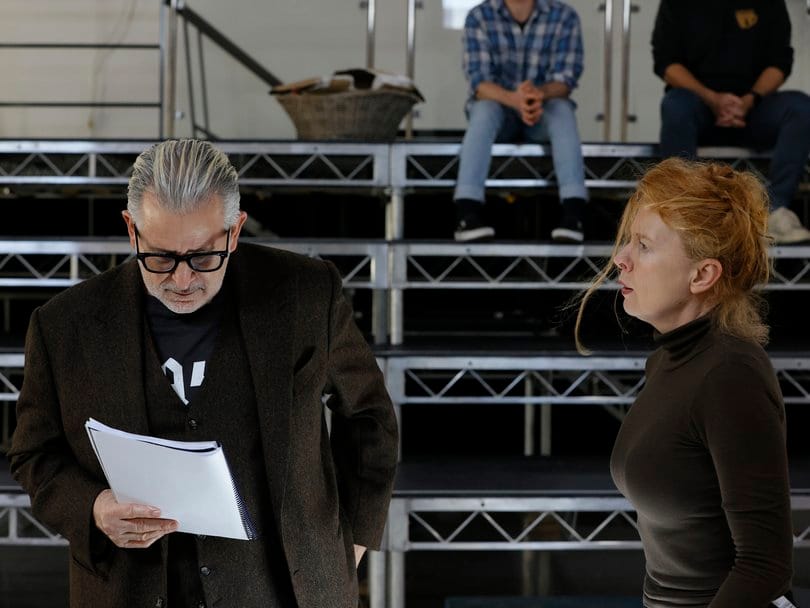
After a hugely successful national tour in 2023 and 2024, Neil Armfield’s production of Death of a Salesman will return to Melbourne in August before heading to Brisbane for a strictly limited season.
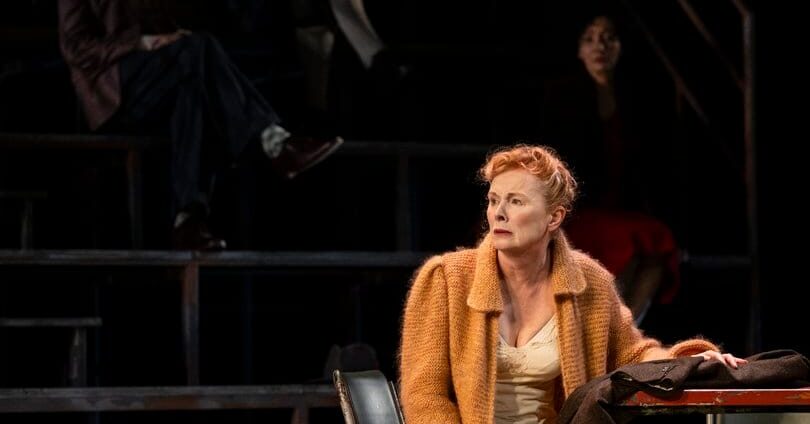
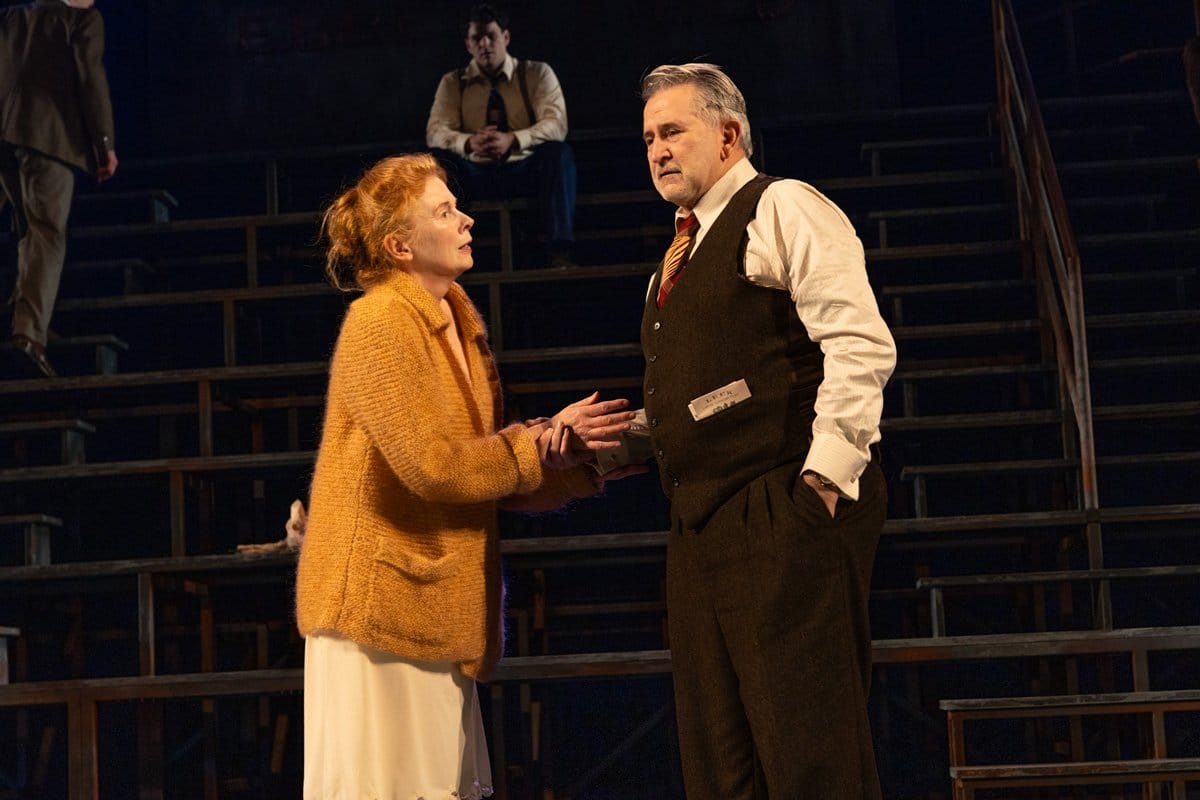
Presenting the social pressures prevalent in post WWII American homes,Death of a Salesman explores one family’s challenges in the face of economic and social change in 1949 America. Set in 1940s Boston, the work follows the Loman family and unfolds through a montage of memories of Willy Loman (Anthony LaPaglia). Linda Loman (Alison Whyte) is a mother and wife with two adult sons and a travelling salesman husband who has delusions of success and grandeur. She is the only person in the household who seems to have a strong grasp on reality, and she’s the character who clues the audience in to what is delusion, what is memory and what is true.
In between her current performances where she’s playing the role of Amanda Wingfield in Melbourne Theatre Company’s The Glass Menagerie, I sit down with Alison Whyte to discuss returning to the role of Linda Loman on Death of a Salesman.
Arthur Miller’s story is a heavy one; a requiem to hopes that never come true. Linda is a loyal and devoted wife, often choosing her husband over her sons, yet spends a lot of the interactions with Willy walking on eggshells. I was interested to hear about how Whyte honours her character as well as herself in such a draining and heavy role, night after night.
“It’s not a burden,” she tells me. “Doing great writing is not a burden. And it’s a shared experience, with everyone in the theatre.
Theatre can’t exist without people looking at it. The audience is something you can’t ignore – it doesn’t happen like that. The magic only happens when it’s inclusive, and when it’s shared. And there’s a responsibility from audience as well as performer – that’s the ticket contract when you go to see a show. You’re not going to sit on your hands, you have to be invested.”
Whyte talks about feeling a difference in the relevance of the piece, just in the years that have passed since this production first opened. “I think the current climate has compounded it. The cost of living. It hasn’t abated since we first put the play on three years ago. Those issues have just not gone away.
And in terms of playing Linda Loman again, I don’t think things have shifted for many women either. Carrying the emotional load in the family, it’s an exhausting thing and I don’t think it’s shifted. That’s one of the things that makes it so timeless.
It’s terrifying what’s happening there. Confederate mentality is quite shocking. And the fact that it’s returning and has been so successful speaks to what people are craving right now – that connection to be relatable but distant. It’s bizarre and doesn’t seem to be kept in check at any point.”

The staging sees a raked stand of bleachers which the work takes place on and in front of. Instead of going on and off stage, characters return to the bleachers where they remain un-lit when not in the current scene. This staging and direction gives each of the actors a unique opportunity to see each other’s entire performances. “I’ve loved watching Anthony move through the role,” says Whyte. “It’s such an honour to watch him from the bleachers; watching this amazing, inner life that he has with that really lonely character. He understands it intrinsically and I think he brings a beautiful flavour to the role.”
Remarking on Neil Armfield’s direction and staging, she says “to be watching from the bleachers and then to be able to step in and, you know, touch the ball and throw it to another performer is great. When you’re stepping in with this production, you’re really stepping in, actually from the viewpoint of the audience as well. You’re stepping in and taking up that mantle and continuing the story, it’s a really beautiful way to present something.”
Armfield is a renowned film and stage director who Whyte has collaborated with before and we spoke about how she’s found working with him on this production. “He has a beautiful kindness towards the work and towards each different character as well,” she says of Armfield. “It’s always about telling the story – we are slaves to the story – and he wants to be able to tease out everything about the story and how to convey that with an empathetic and human vision. He’s a true artist.”
“When this play was written, it was a very turbulent time in America. And now, it’s a very turbulent time and time of great change. I feel that American artists are going to be writing classics as we speak.”
Death of a Salesman will be playing a strictly limited season in 2026,
Melbourne from 11-22 August
Brisbane from 28 August – 6 September