Type – Independent Theatre, Magic Realism, Welsh Theatre
If you liked – Till The Stars Come Down, Curious Incident Of The Dog In The Night Time, The Invisible Man
How My Light Is Spent: An enthralling piece of magic realism
There is something deeply introspective about How My Light Is Spent. It creates a tiny, strange world, fills it with people desperately trying to be seen, and then somehow makes that world feel enormous.
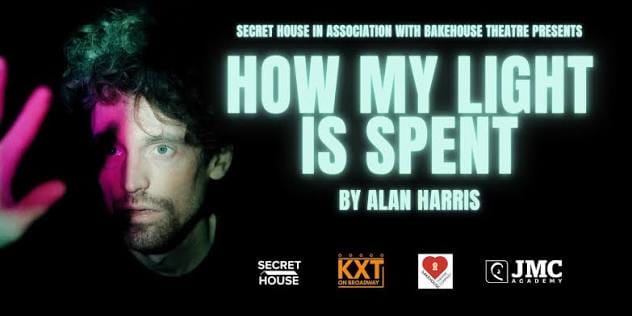
Written by Alan Harris, How My Light Is Spent is an excellent piece of magical realism and a huge middle finger to anyone who has ever told a writer to ‘show, don’t tell’. Much of the story is quite literally told to us, in a similar fashion to the British juggernaut The Curious Incident of the Dog in the Night-Time.
Jimmy is 34, lives with his mum and works at Newport’s only drive-through doughnut restaurant. Every Wednesday he calls Kitty, an adult chatline operator, for precisely nine minutes. Then Jimmy loses his job and, shortly afterwards, starts disappearing. Literally.
It is a wonderfully ridiculous premise that Harris uses to explore loneliness, isolation, desire, and that very human need to have someone, anyone, actually see you. The writing is incredibly funny and deeply heartfelt without ever feeling voyeuristic.
At the centre of the piece is James Smithers as Jimmy and Jane Angharad as Kitty, two beautifully fractured people whose unlikely connection becomes more than a spark. Smithers gives Jimmy an awkwardness that could easily become caricature but never does, finding enormous warmth and humanity in a man who is quite literally fading from view. Angharad is equally captivating as Kitty, balancing the character’s sharpness, vulnerability and desire for something more. Their relationship is tender without becoming saccharine or losing its emotional truth in the more ‘alright, now, go with us’ moments of Harris’ writing.
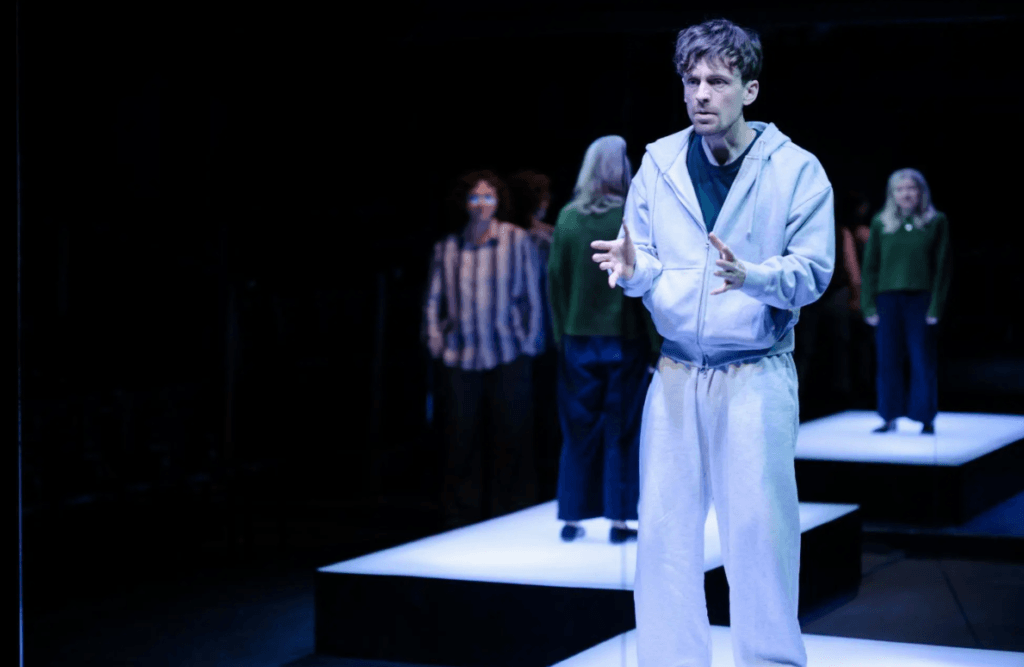
Surrounding them, Renée Billing, Pita Lolohea and Kira McLennan are exceptional. The three operate almost like a theatrical hive mind, moving the story forward with an infectious energy, each finding wonderfully specific and sometimes brash characters along the way. It is a genuinely captivating ensemble, and the five performers work together with an extraordinary sense of rhythm.
Director Braiden Toko understands exactly what sort of fractal world Harris has created and, more importantly, trusts it. The direction never tries to explain away the magical realism or force meaning onto it. Instead, Toko leans into the theatricality of the text, creating a production where narration, movement, space and voice are constantly working together at a near-harmonious pace.
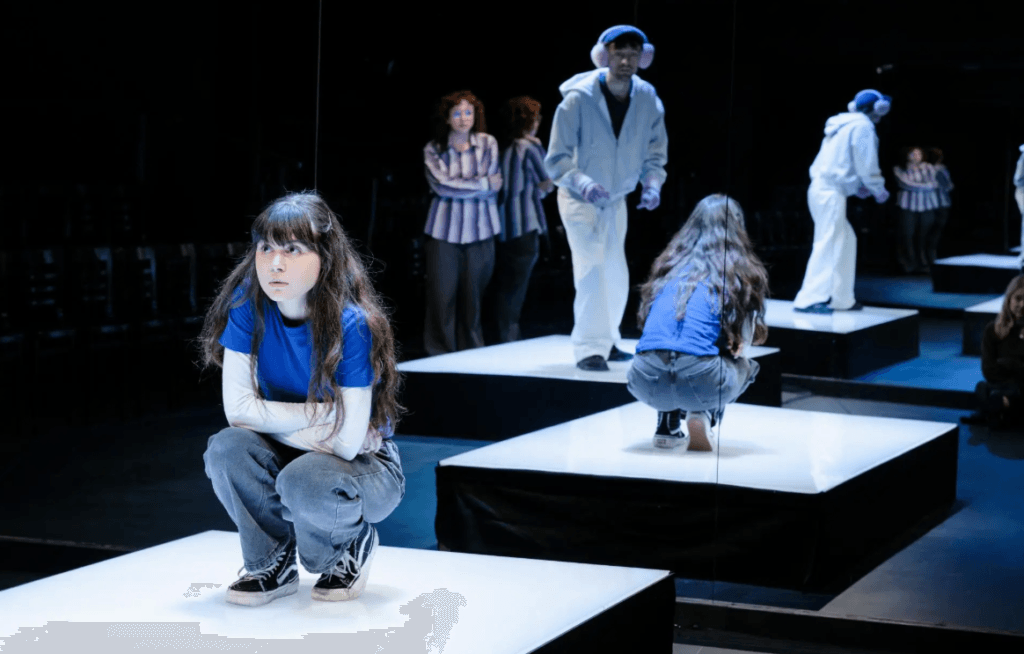
The visual storytelling is particularly stunning, creating something akin to a liminal space. James Smithers’ mirror-based set, paired with Clare Sheridan’s lighting design turns the KXT space into something simultaneously stark and dreamlike. Light becomes more than illumination; it becomes part of the broader language of the piece. Alongside Anthony MacDermott’s sound and composition, the production creates a world that feels slightly removed from our own while remaining painfully recognisable as outer-suburban life.
Is How My Light Is Spent Worth Seeing in SYDNEY?
Secret House have firmly established themselves as one of the best independent producers working in Sydney, consistently finding fascinating contemporary writing and giving it ambitious productions. How My Light Is Spent is not only another excellent addition to their body of work, but a genuine standout of Sydney’s independent theatre year – see it, before it vanishes
Tickets and Practical Info for How my Light is Spent in SYDNEY🎟️
How my Light is Spent is playing at KXT on Broadway until 26 September 2026
90 minutes with no interval
Director Braiden Toko,
Set Designer James Smithers
Lighting Designer Clare Sheridan
Sound Designer Anthony MacDermott
Costume Designer & Asst Director Charlotte Savva
Stage Manager Matilda Holton
Asst Producer Talia Benatar
Cast Jane Angharad, Renée Billing, Pita Lolohea, Kira McLennan, James Smithers; understudies Nicholas McGrory, Charlotte Savva