Type – Italian Opera, Romantic Era, Verdi
If you liked – La Traviata, Tosca, Don Giovanni
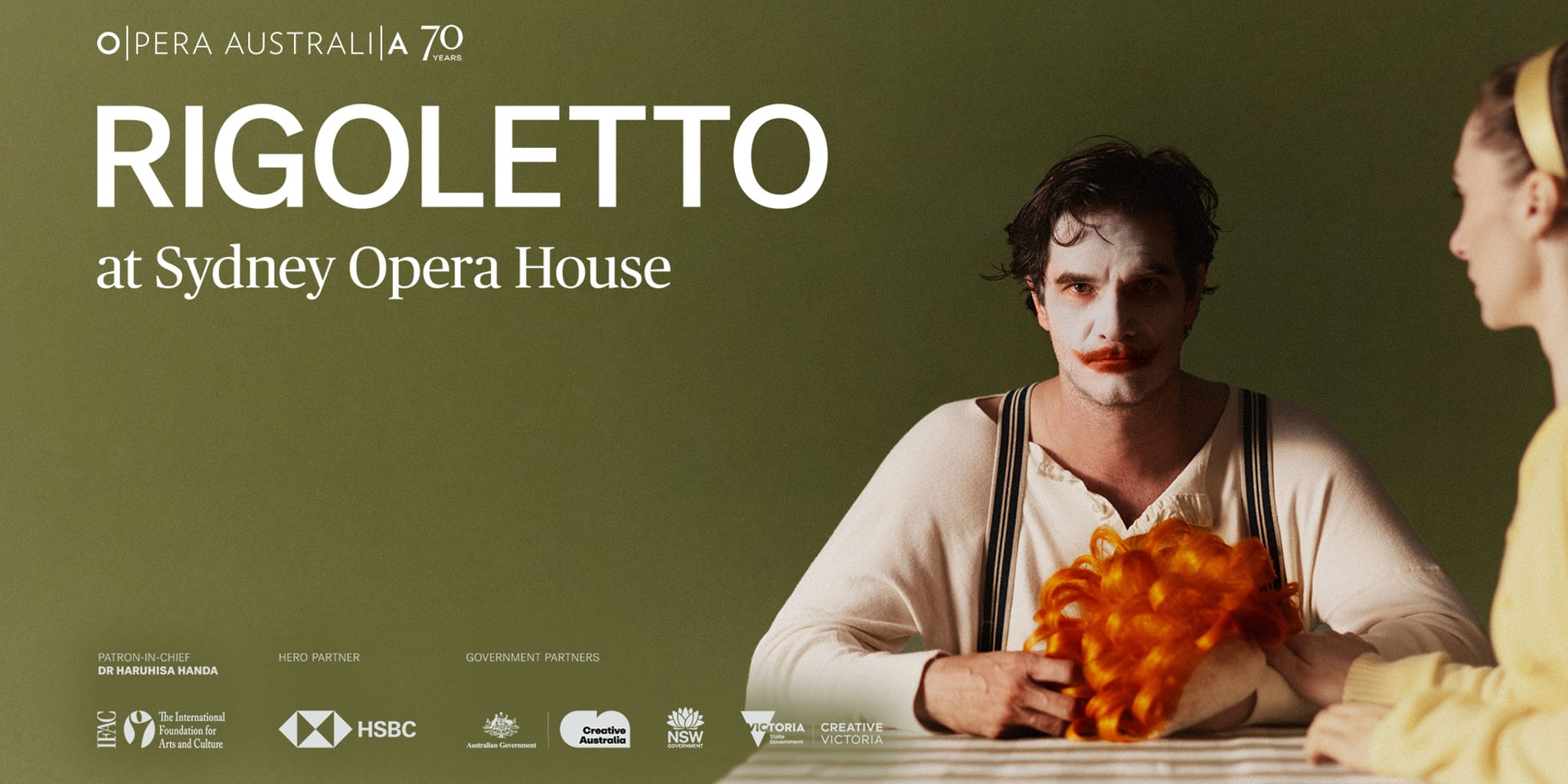
Rigoletto: Seduction, betrayal, disguise and assassination – who says opera is dull?
Written around the mid-point of his opera-writing days, Rigoletto kicked off the biggest success-streak of Verdi’s career where he released three mega-hit operas in two years –Rigoletto, Il Trovatore and La Traviata. Amidst the mid-19th century censorship era, the work almost didn’t go ahead because of its controversial themes, as it portrayed a European monarch as an immoral, sexual predator.
To stage the work, Verdi and his librettist had to compromise on a lot of characters and scenes to get it over the line – but it still pushes the limits in the way that so many of Verdi’s masterpieces do. Not only is the toxic male entitlement trope still relevant 170+ years on, so is the censorship of art that’s attempting to be publicly staged today.
The story follows Duke Manuta, a womanising manwhore who uses his jester Rigoletto to mock and humiliate the men he’s cuckolded. Count Monterone (whose daughter was also one of the Duke’s many victims) curses the Duke for his corrupt behaviour and when Rigoletto taunts and teases him – the Count curses him too. Duke Manuta disguises himself as a good guy and Rigoletto’s daughter Gilda falls in love with him to her dads’ horror. Disguise, infatuation, deception and rage ensue before Rigoletto’s plans to have the duke killed go terribly wrong.
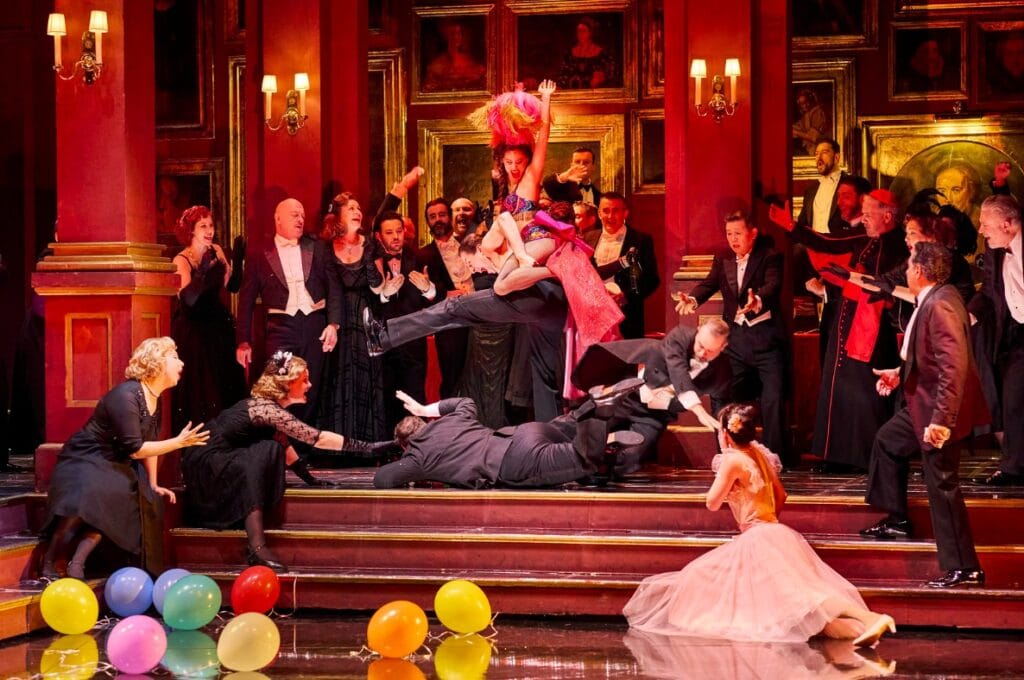
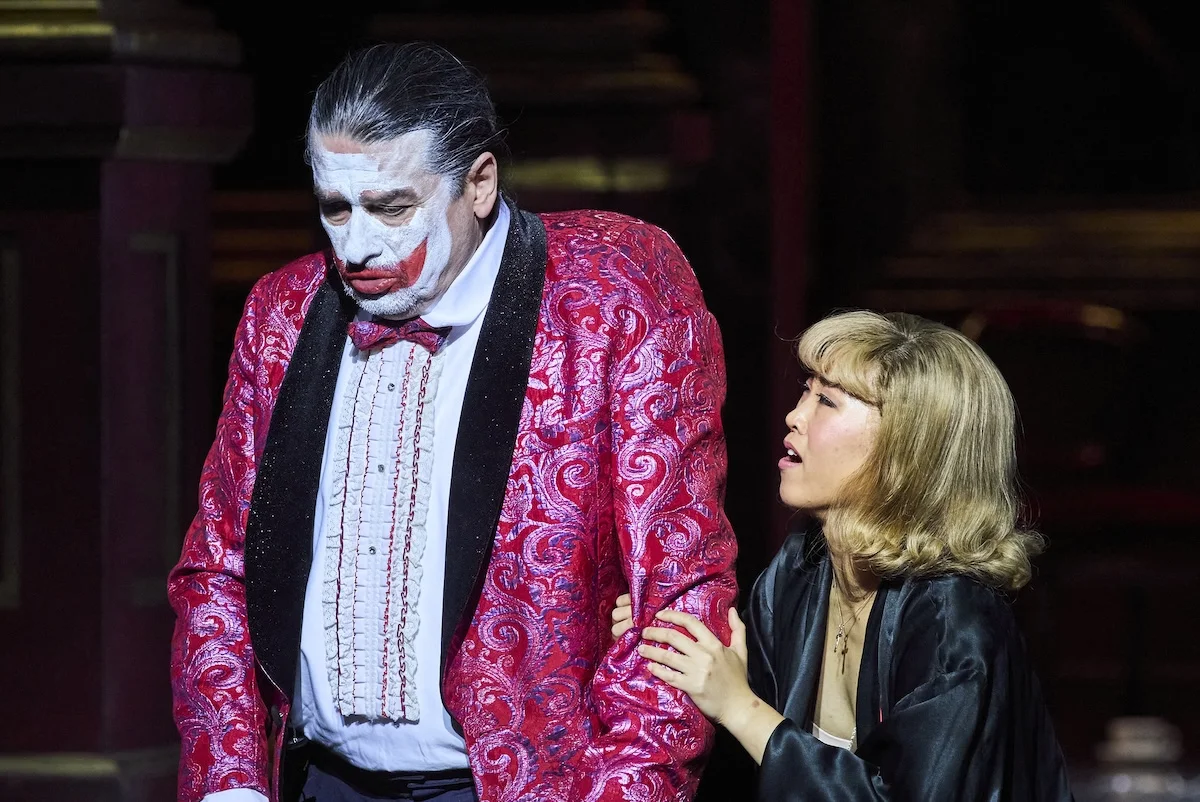
Elijah Moshinsky’s towering 1991 production returns to Sydney Opera House, set in 1950s Italy and directed by Kate Gaul. Michael Yeargan’s luscious set and costumes are brightly coloured and heavily detailed with contrasting textures and patterns; amongst feathers, velvet, satin, paisley, frills, sparkles, bow ties and waist coats. The set is like a doll house that rotates, presenting different scenes as it turns, inviting us into the multi-storey interior and highlighting the powerful contrast between the upper and lower-class lives. Robert Bryan’s lighting mimics the warm, golden hues vs cold, stark, muted tones that we see on stage.
After first performing the role with the company in 2018, Dalibor Jenis returns to the titular character Rigoletto. Slightly restrained to begin, he warms into the vocally and dramatically demanding role, delivering the mid-aria pivot from aggressive and callous jester to devastated father pleading for pity, with gripping intensity. His physical embodiment of the hunch-backed clown hobbling with two walking sticks is a fascinating juxtaposition against his darkly rich and resonant timbre that so perfectly matches the majesty of the score.
In her company debut, Korean-Australian soprano Gemma Nha portrays Gilda; daughter of Rigoletto with great musical agility. Her Caro Nome is divine; a memorably breathtaking vocal performance with floating coloratura lines, effortless pianissimo high notes and crystal-clear tone. While her portrayal could benefit from greater dramatic depth and commitment at times, Nha delivers a musically sensitive and stirring Gilda.
Kang Wang plays the immoral playboy Duke of Mantua, who swaggers around singing of his conquests. His bright and shimmery sound is effortlessly clear, even when singing from off stage and delivers a cocky and lively La donna è mobile with great charm and the perfect amount of squillo.
I found the character role portrayals lacked chemistry a lot of the time, however the Opera Australia Chorus carry the hustle and bustle and are consistently engaging across the ensemble scenes. Led by Sesto Quatrini, the Opera Australia Orchestra make a sparkling and intense, cohesive sound that brims with orchestral dialogue from start to finish. Verdi uses a conversational writing style between instrument and voice, notably using the cello as an independent character that mimics and exposes Rigoletto’s psychological state which Quatrini’s leadership brings great clarity to.
While some of the stage direction felt distancing at moments (I’ve been wondering why Gilda sings half of her aria sat in an armchair at the very back of the scene), the staging of the trios and quintets are more engaging and easier to follow. Gaul’s revival direction makes incredible use of the space, cleverly utilising the audience’s perspective of seeing into multiple rooms concurrently.
Is Rigoletto Worth Seeing in Sydney?
The singing is superb, the score is swelling and magical, and it includes one of opera’s best known arias. Rigoletto explores a deeply toxic and patriarchal world which Verdi uses to explore predatory themes of power and systemic violence. While Moshinksyy’s production is spectacular and a resounding success, 35 years on I think it’s a good time to stage a Rigoletto that doesn’t look past the toxic male vitriol so easily.
Tickets and Practical Info for Rigoletto in Sydney 🎟️
Tickets: https://www.sydneyoperahouse.com/opera-australia/2026-season/rigoletto
Playing until Friday 21 August at the Joan Sutherland Theatre.