Type – Chekhov, Realism, Large Ensemble
If you liked – Dear Elena Seergevna (Old Fitz Theatre), A Doll’s House
Three Sisters: Realism gets existential in Chekhov’s masterful portrayal of loneliness and isolation without the need for technology
In Chekhov’s Three Sisters, director Clara Voda encapsulates the essence of isolation and loneliness that the famed author was so acutely able to impart in his texts. In a world where technology has separated us more than it’s managed to connect, Three Sisters serves to remind us that Big Tech doesn’t need any help in its mission to isolate; we’re more than capable of doing so on our own.
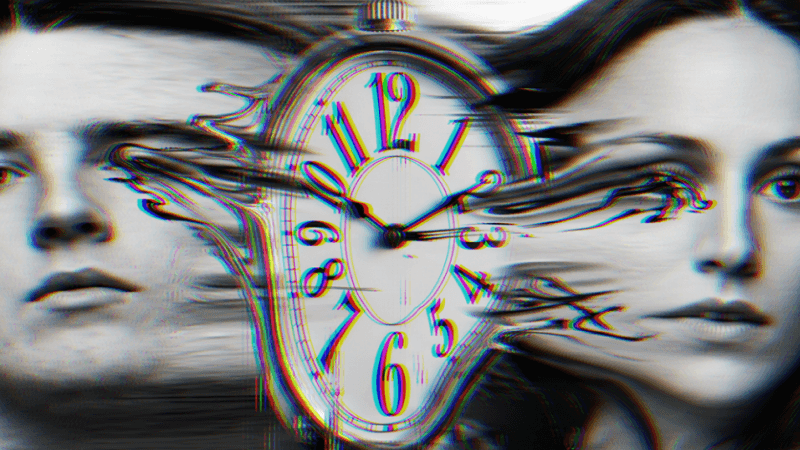
At the Old Fitz Theatre, audiences get to experience a whole different side to Russia than that playing over at the Sydney Lyric Theatre in Anastasia – it’d make for a great double bill. In a small provincial Russian town, the Prozorov sisters – and their brother, more on him later – are living lost lives following the death of their parents. Over the span of a blurred amount of time, we see them pass their days with memory, longing and unspoken desire. Beyond them all is Moscow, something that was once a tangible happiness within their grasp, now, just a symbol of the unachievable.
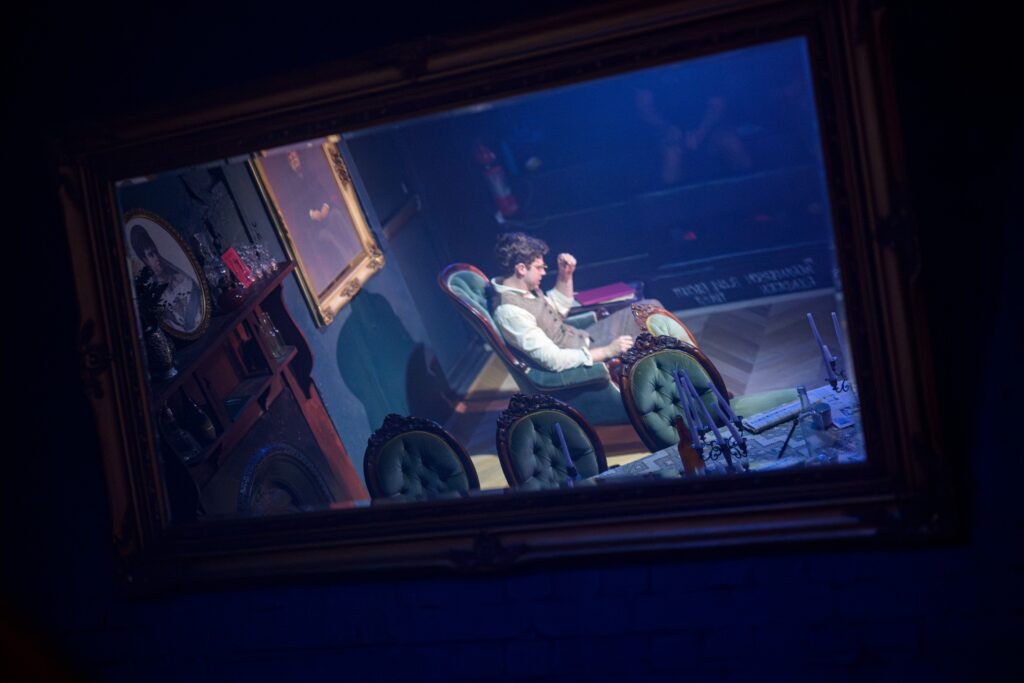
Dressed under Sam Wylie‘s impeccable, evocative lighting design, Ella Wilkinson‘s set is devine in its intricacies. There’s a beautiful sense of play here that can clearly be seen – like Wilkinson had the company credit card and went on a spree at an antique Salvos. Portraits of the family’s deceased father and mother oversee the family table, always prepared with glassware and alcohol should company come, or a tragic night requires a stiff vodka. A chaise lounge is nestled near a plain, wooden piano, while a large armchair sits empty, a reminder of the father who held their future together. Above, a single staircase gives height to the country house, while a cleverly placed divide backstage creates depths as an exit to the rest of the house.
Creating this dollhouse-like effect in the Old Fitz is no easy feat, and the driving success of this comes down to the artistry between Wylie’s lighting and Wilkinson’s design. A large, ornate rectangular mirror hangs behind the dinner table, reflecting the emptiness and the fullness of the house at any given time – shades of blue and white are played with to create stunning tableux. The visual metaphor is quite literally staring us in the face. Chekhov – and Voda – offer a mirror to our lives through the reflection. Three Sisters is not some distant memory in a foreign country, these characters are us with all of our desperations, our desires, and our loneliness laid bare.
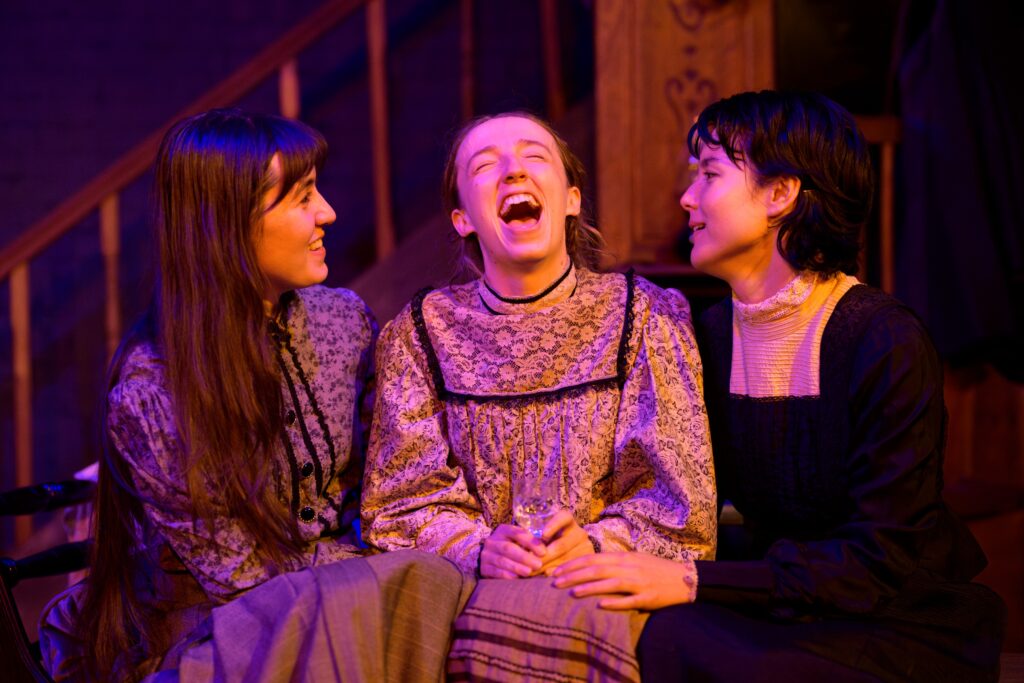
Dressed in Bronte Hunt’s costumes, each character is three-dimensional. They all may not be as full-bodied in their finality as others, but you clearly gain a sense of who everyone is without needing to do much leg work. Hunt utilises decorative colours at the play’s start as we gather on a Saint’s Day festivity. Later, we transition to drab grays and washed out tones – the monotony of life and work has set in. It’s like a visual representation of how you dress on your first day of your new career compared to the last when you hand in your two weeks.
Madeline Li‘s Masha is rigorously layered. Whilst the rest of the family bustles and fills their time with philosophical debate and tedious routines, Masha is loudest through silence. Li has an inescapable ability to draw you to her, both through her eyes which seem to drift vividly towards Marsha’s desires, and the full-bodied approach she instills in Masha. Opposite, she reunites with Dear Elena Seergevna co-star Faisal Hamza as Masha’s husband – the sweet yet unpassionate school teacher Kulygin. Hamza himself is the explosive energy that the show needs after an altogether disjointed and slow start. Together, Hamza and Li drive the action whilst fully serving the ensemble.
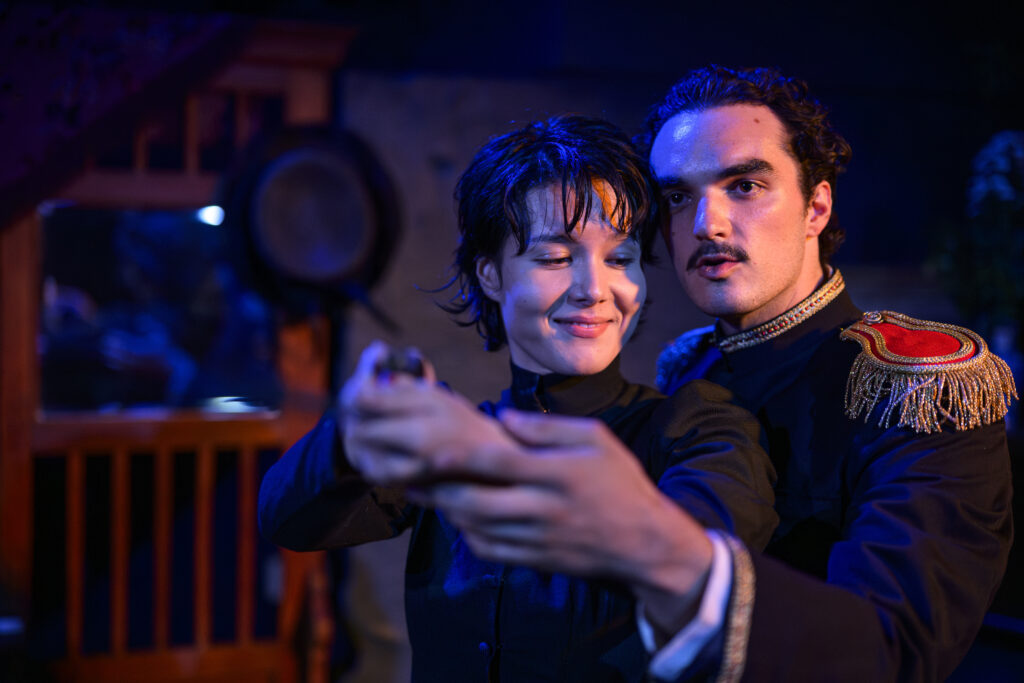
Teodora Matovic‘s Olga takes on the airs of the older sibling, she despises the need to work to support a family whose sole owner of the property left to them – the elder brother Andrey (Matthew Alexander) – wastes the family funds through gambling. His marriage to Natasha (an unpredictable, unhinged portrayal by Emma Wright) and her posturing, aristocratic sensibilities is a bane to his sisters’ existence.
Elswhere, Tessa Olsson‘s Irina, the youngest of the family, pines for Moscow as much as I pine for the arts to be fully funded in Australia. We see Irina carried through a wave of changes throughout Three Sisters, with Olsson succeeding in most. Moscow is the idyllic existence, one where it seems you don’t need to work, where you can philosophise and find love, where education is thriving and passion burns. She is our persistence of hope, and it’s her loss where we should be feeling the strongest stab from Chekhov but ultimately lands below the mark.
Looking like a philosophising Jacob Elordi, Alfred Kouris‘ Vershinin ponders and preaches, throwing around the weight of his rank in the military that is stationed in this rural village. We see the man of his stature contained in constant motion. But perhaps it’s Cym‘s dottering nanny, Anfisa, who holds the most rigorous expectations of a western life – block out the noise, put your nose to the ground and someday you’ll get your own space in government housing.
Voda goes for realism in this Three Sisters, utilising noise to signify reality. For the first half-hour, it’s pretty jarring to hone in on. Noises outside the estate from the other characters laughing and conversing made me nearly give a glare to a very innocent audience member who I mistook for talking. Layered over the top, Justin Li‘s sound design can lean more into cacophony rather than an aid in some instances. Translation by Laurence Senelick allows for filler words and improvisation to take place amongst Chekhov’s dialogue, with the only downside to this being a significantly extended runtime. The pace of the play’s end drove home the existential dread of time’s weight, but it wasn’t doing wonders for my dreams of a cushion.
Is Three Sisters Worth Seeing in Sydney?
What’s beautiful about this Three Sisters is the delicate balance of humour coupled with acute observations of the human existence from Chekhov. It’s one of those plays you sit through, wishing you had a notepad to scribble down some one-liners that would look great on a coffee mug at the workdesk. Throughout, Voda invites us to reflect on our aspirations, our own sense of who we are. It kind of makes you rethink how much you love that daily commute into work.
Tickets and Practical Info for Three Sisters in Sydney 🎟️
Old Fitz Theatre
Until 9th May, 2026
Tickets: https://www.oldfitztheatre.com.au/three-sisters
Production Company: Last Waltz Productions
Writer: Anton Chekhov
Translator: Laurence Senelick
Director: Clara Voda
Producer: Madeline Li
Assistant Producers: Teodora Matovic & Toby Carey
Set Designer: Ella Wilkinson
Costume Designer: Bronte Hunt
Stage Manager & Sound Designer: Justin Li
Vocal Coach: Simon Masterton
Music Director: Alyona Popova
Assistant Director: James Thorn
Cast (of 11): Matthew Alexander, Toby Carey, Faisal Hamza, Alfred Kouris, Madeline Li, Teodora Matović, Lập Nguyễn, Tessa Olsson, Cym, Ren Watson, Emma Wright