
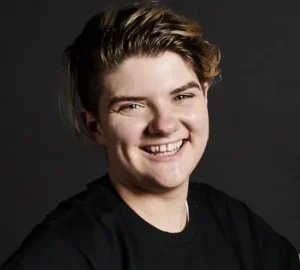
Lily Hayman
(she/her)
Lily Hayman is a young writer, director and producer who lives and works on unceded Gadigal Land. She is the current Young Leader and Associate Producer at Shopfront Arts Co-Op, and one half of the all-female team behind Purple Tape Productions. Having received a Bachelor of Performance and First Class Honours (Theatre) at the University of Wollongong, Lily has since created and presented two fully realised productions: Fledgling (KXT 2022, MerrigongX 2021) and The Infinity Mirror (Shopfront ArtsLab 2021, BrandX Flying Nun Residency 2022). She has worked as Assistant Director to Margot Politis with Milk Crate Theatre and has been a member of the Harness Ensemble of artists with and without disability since 2021. In 2023 Lily is looking forward to directing Expiration Date and Party Girl as well as developing her own works Preparing for the Inevitable and Perfect Match.
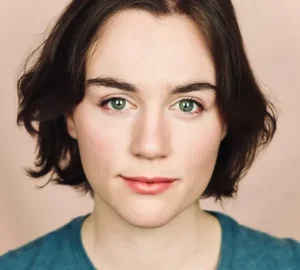
Maeve Hook
(she/her)
Maeve Hook is a queer director, writer and actor, and co-founder of TART Theatre Collective. Maeve has a rich performance history in circus and is a BFA Acting graduate from Queensland University of Technology. In the final year of her studies, she received the Jennifer Blocksidge Memorial Award, allowing her to train with Shakespeare and Company (Massachusetts USA) post-graduation. She has several independent performance credits, some of which include the title role in ‘Anna Bella Eema’ (Dir. Anja Homburg), Mercutio in ‘Romeo and Juliet’ (Dir. Shaz Mullens, Fresh Theatre) and the lead in Queer historical short film ‘Ballad’ (Dir. Roe Bonnici). Maeve was a chosen playwright for ATYP’s Emerging Playwrights National Studio (2021) and is currently a part of She Writes at Theatre Works (2022-2023). Her directing work has most recently been seen by national and international audiences with the 2022 tour of ‘POLES: The Science of Magnetic Attraction’.
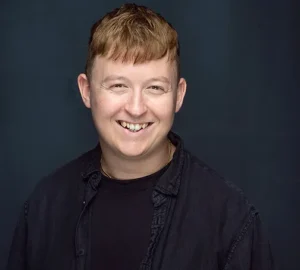
Hayden Tonazzi
(they/him)
Hayden Tonazzi (they/he) is a theatre and musical theatre director, and creative producer based in Gadigal. A graduate of the NIDA MFA Directing program, this year they commence their appointment as Artistic Associate with the Australian Theatre for Young People (ATYP), after being an Associate Artist at the Kings Cross Theatre (KXT).As Director, their play credits include Shack by George Kemp for ATYP, Tell Me Before The Sun Explodes by Jacob Parker for KXT, the Australian Premiere of Significant Other by Joshua Harmon for The New Theatre, This Genuine Moment by Jacob Parker for La Mama & The Old 505. Their musical theatre credits include Miracle City by Nick Enright for NIDA, Carrie: The Musical for The Depot Theatre, Parade at The Seymour Centre, and The Hatpin at The King Street Theatre. This year they will be developing a new work titled Pickled (كبيس) for PYT Fairfield, creating a new youth-devised work titled Stop. Drop. And Listen. for Shopfront Arts, and directing a new Australian play, The Last Train To Madeline by Callum Mackay for Fever103.

Tyler Fitzpatrick
(she/her)
Tyler (she/her) is a stage and production manager, producer, lighting designer and theatre maker currently based on unceded Dharawal Land. She graduated with distinction from the University of Wollongong, earning the Merrigong Theatre Company Production Prize. Tyler has been the Production and Operations Manager at Shopfront Arts Co-Op since 2020 and services arts organisations as a Production Associate with The Paperjam Partners. With Paperjam, she has production managed Jailbaby and Pony (Griffin Theatre Company, 2023), A Practical Guide to Self-Defense (National Theatre of Parramatta/Merrigong Theatre Company, 2022), Nothing (NTofP, 2022), and Dust (Milk Crate Theatre Company, 2022).

Sarah Carroll
(she/they)
Sarah Carroll (she/they) is an award winning Pasifika queer and neurodiverse writer, performer and producer working on Dharug Land (Western Sydney). Sarah has two successful one woman shows under her belt, ‘Cherry’ (Sydney Fringe Award Winners and Hollywood Fringe Nominee) and ‘Unkissed’ (Developed with Shopfront – ArtsLab). They also run their own production company Sour Cherry Productions that has successfully produced works in the indie theatre scene and fringe circuits.
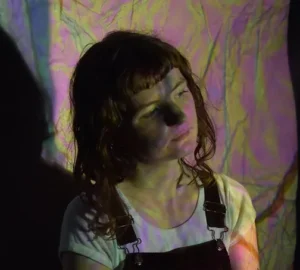
Brea McCarthy
(she/they)
Bria McCarthy (she/her) is a Wiradjuri/Irish writer and theatre-maker working on Dharug and Gundungurra land. In 2019 she wrote and directed her debut play ‘A Game For Flies’, which played at PYT Fairfield. In 2022 her debut manuscript ‘Finding Liminas: The Sudden Tree’ was shortlisted for the Text Prize 2022.
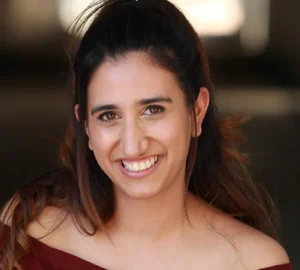
Almitra Mavalvala
(she/her)
Almitra (She/Her) is a Sydney-based, Persian Pakistani, performing artist, writer, composer and independent producer. She holds a Bachelor's Degree in Music (Music Theatre) from the Australian Institute of Music. Almitra’s theatre credits include Fiddler on the Roof (Willoughby Theatre Company) & Kinky Boots (Packemin Production). She was also part of the Feminist Comedy show ‘Tough Titties’ as a featured musical artist. Her screen credits include, a short film, ‘Red Lantern’ (Noah Films, Supporting Female Lead)
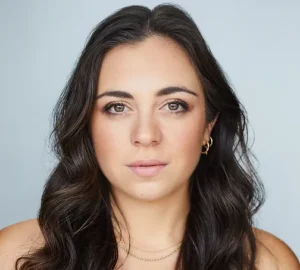
Eleni Cassimatis
(she/her)
Eleni Cassimatis (she/her) is a Sydney-based actor, and a graduate of the Actors Centre Australia. Eleni’s theatre credits include productions of Macbeth, Hamlet, The Comedy of Errors and In A Nutshell for Bell Shakespeare. She was also a member of Bell Shakespeare’s national touring company The Players in 2020 and 2021. Eleni’s voice work includes the indie short Time Stamp. Eleni is a proud MEAA member.
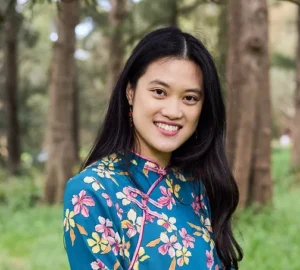
Tiffany Wong
Tiffany Wong is a theatre-maker with a disability working across Gadigal and Wurundjeri lands. She is an Australian-born Chinese artist with Singaporean and Malaysian heritage.Tiffany is a director for stage. She is the 2024 Cosgrave Associate Artist for Bell Shakespeare. Her credits include Boom (Slanted Theatre & KXT bAKEHOUSE), Short Blanket (Slanted Theatre & Meraki Arts Bar), Lady Precious Stream (Slanted Theatre & The Flying Nun at Brand X), Three Fat Virgins Unassembled (Slanted Theatre & KXT bAKEHOUSE), and Ching Chong Chinaman (Slanted Theatre). She has also worked as an Assistant Director to Courtney Stewart for Top Coat (Sydney Theatre Company), to Lucy Clements on Iphigenia In Splott (New Ghosts Theatre Company), and as a Directorial Assistant to Richard Carroll on Murder For Two (Hayes Theatre Co), and to Javaad Alipoor on Things Hidden Since The Foundation of the World – Creative Development (National Theatre of Parramatta).
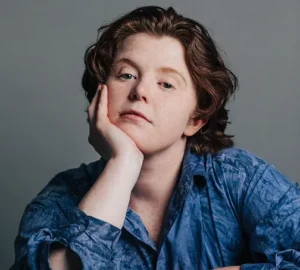
Em Tambree
(they/them)
Em Tambree is an emerging director & producer based in Naarm. Em undertook intensive Musical Theatre training at Centrestage, SHOWFIT (2016) and received their Diploma of Music for Musical Theatre at The Australian Institute of Music (2019). Post graduation & disability diagnosis, Em Tambree's exploration into accessibility within the industry led them to develop experience in almost every aspect of stagecraft.They founded TART Theatre Collective with Maeve Hook in April 2022; an independent theatre company focused on the untold, misheard, and/or ignored stories from underrepresented voices and communities (Company in Residence 2023, The Motley Bauhaus).
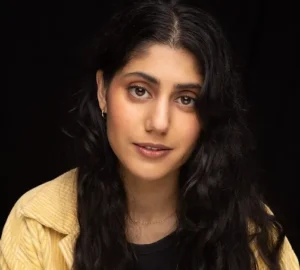
Ava Madon
(she/her)
Ava is an Actor and Singer graduating from Lasalle College of the Arts in Singapore. Her work spans theatre, musical theatre and television. She was most recently seen in Sport for Jove’s I Hate People/Timon of Athens, a production praised by the Sydney Morning Herald as “the pinnacle of Shakespeare in Sydney this century”.Her other recent stage credits include If/Then (Neglected Musicals), Venus and Adonis (Sport for Jove),The Lucky Country (Hayes Theatre Co.), Macbeth, Othello (Sport for Jove), Merrily we Roll Along (Hayes Theatre Co.), Bells are Ringing (Neglected Musicals), Titanic the Musical: In Concert (The Marrollo Project) and Cinderella in Into the Woods with both Belvoir and Watch This, for which she was nominated for a Greenroom Award.

Aloma Barnes
(she/her)
Aloma Barnes is a distinguished costume and set designer, actively contributing to both theatre and screen. With a foundation in fashion design, marked by a Bachelor of Arts degree from Mumbai, India, Aloma's passion for storytelling through attire and settings propelled her to pursue further education at the London College of Fashion. There, she completed her Master’s degree in Costume Design for Performance, honing her skills and artistic vision.Her career trajectory includes notable roles, such as a costume designer for various theatre productions in London and a design intern for an Amazon Prime web series in Mumbai.
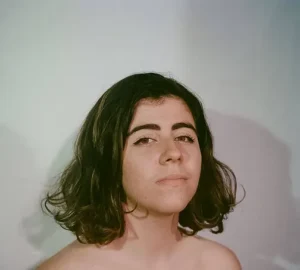
Jess Zlotnick
(she/her)
Jess is a multi-disciplinary creative living and working in Sydney. She has experience as a writer, director, designer, artist, and musician. Jess graduated from the University of Sydney in 2019 with a double major in Gender Studies and Theatre and Performance Studies. Jess is passionate about diversity and challenging stereotypes through theatre and storytelling.
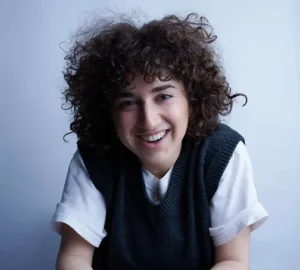
Ziggy Resnick
(they/she)
Ziggy graduated the NIDA (BFA acting) in 2020 where they worked with and learnt from many inspiring and change makers and artists: Jim Sharman (Twelfth Night), Leticia Caceres (SIX), Priscilla Jackman (Ghosts). Since the institute Ziggy starred in Girls in Boys Cars (Riverside, dir. Priscilla Jackman), Feminazi (Belvoir’s 25A), A is for Apple (Griffin Theatre), How to Defend Yourself (Old Fitz Theatre) and The Eisteddfod (Old Fitz Theatre). Ziggy also toured with The Bell Shakespeare Players in 2022 and worked as a clown on Opera Australia’s Ernani.
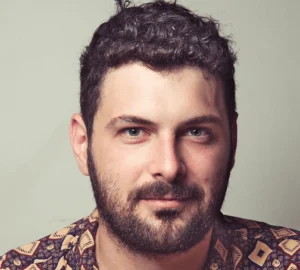
Solomon Thomas
Solomon Thomas' work explores the intersection between the physical and digital in theatre, experimenting with how theatre and film can co-exist in a live context. He works as a director, performer, puppeteer, and video designer and is driven by how these practices meet formally. His recent works include POV (Belvoir 2024), Oh Deer! (Rising, 2023), Sex Magic (Griffin 2023), UFO (Griffin 2023), Autotune (Brand X, 2022), The Sucker (Brand X, 2021) and What the Ocean Said (Opera House, 2022). Solomon is a core member of re:group performance collective, who’s work Coil had a national tour with Arts on Tour and was also presented at the Opera House, Mona Foma, PACT and Next Wave.
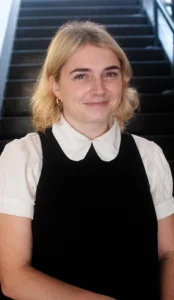
Zoë Hollyoak (she/her)
Zoë is a Director and Creative Producer who has worked across a range of organisations, including Performance Space, Performing Lines, Perth Institute of Contemporary Arts and Black Swan State Theatre Company of WA. She holds a Bachelor of Performing Arts (Performance Making) from the Western Australian Academy of Performing Arts (WAAPA) and a Master of Fine Arts (Directing) from the National Institute of Dramatic Art (NIDA). Zoë runs essential workers, a Sydney-based Performance Making Group.
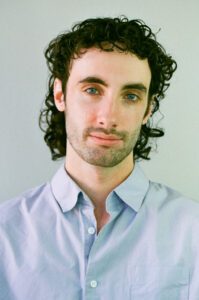
Morgan Moroney (he/him)
Morgan Moroney (he/him) is a lighting and video designer working across theatre, opera, dance and installation. A graduate of NIDA, Morgan received the 2020 APDG Emerging Designer for Live Performance Award for his design on GHOSTS (NIDA). Morgan has been nominated three times for a Sydney Theatre Award in Best Independent Lighting Design, winning in 2023 for COLLAPSIBLE (essential workers). He won the 2023 APDG Award in Lighting Design for CLEANSED (Redline Productions). In 2024, Morgan was the recipient of the Michael Northen Award for emerging Lighting Designers, administered by the Association for Lighting Production and Design in the UK. Morgan is one half of independent theatre contingent essential workers.
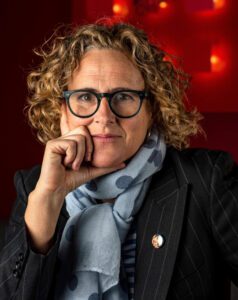
Ursula Martinez
Writer, performer and comedian, Ursula Martinez is probably best known for her internationally acclaimed and now-infamous cult magic striptease act, Hanky Panky. A star of Olivier Award winning smash-hit cabaret show La Clique she co-created C’est Barbican which also won an Olivier Award for Best Entertainment.Raised in Croydon, she began wowing the crowds with her comic suburban flamenco extravaganza Viva Croydon, described by Attitude magazine as “One of the funniest and most original acts on the London cabaret scene”.Ursula had a huge hit at the 1998 Edinburgh Festival with her highly original theatre show Family Outing, starring herself and her parents which subsequently toured to Europe, the UK and Australia.

Courtney Monsma (she/her)
Courtney Monsma is a musical theatre performer and actor born and raised in Australia. Courtney has been performing since she can remember from a very young age and that love has thrived. The power to inspire and empower audiences through storytelling is something she is passionate about.Courtney graduated from the Queensland Conservatorium Griffith University with a Bachelor of Musical Theatre. She is currently performing in the role of Glinda the Good Witch as part of the national tour of Wicked. She is most known for her breakour role of Princess Anna in Disney’s Frozen Australian Tour, playing opposite the original Australian Elphaba, Jemma Rix. Raised in Croydon, she began wowing the crowds with her comic suburban flamenco extravaganza Viva Croydon, described by Attitude magazine as “One of the funniest and most original acts on the London cabaret scene”.Ursula had a huge hit at the 1998 Edinburgh Festival with her highly original theatre show Family Outing, starring herself and her parents which subsequently toured to Europe, the UK and Australia.
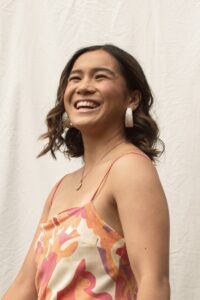
Maybelline San Juan (she/her)
Maybelline is pretty, witty, and funny-but that’s her burden to carry. Like Hannah Montana, she’s both a rising arts producer and emerging artist.Currently the Associate Producer at Sydney Festival, she brings the “Art of Summer” to life each January. Known for her commitment to diversity, accessibility, and sustainability, Maybelline was celebrated as one of Adelaide Festival Centre’s 50 Stories in ‘Celebrating 50 Years’.Maybelline made her artistic debut in the prestigious ‘Class of Cabaret’ at the 2018 Adelaide Cabaret Festival. In 2024, she returned to the stage as a versatile stand-up comedian and cabaret performer. Currently, she is a 2024-2025 artist-in-residence at Shopfront Arts Co-op’s ArtsLab, while regularly featuring on Sydney’s comedy circuits. Maybelline has also showcased her original work at Hayes Theatre Co.’s and with Contemporary Asian Australian Performance.

Ren Williams (she/her)
Ren Williams is an Australian film & theatre actor, having trained with Honours at the Flinders University Drama Centre. Also specialising in directing and writing, Ren is a co- founder of independent theatre company ‘CRAM Collective’.After graduating in 2020, Ren made her directing debut in 2021 with Deadset Theatre Company's show 'Truck Stop' along with winning State Theatre Company SA's Young Playwright Award for her play 'Modified'. In 2022 Ren performed and produced The CRAM Collective's world premiere 'Something Big' (Dir. Connor Reidy), following their sold- out show of 'New World Coming' - a show created in 5 days. Later that year she also performed as five different characters in Kinetik Collective's StateSide show 'Kill Climate Deniers’ (Dir. Clara Solly-Slade). In 2023, Ren starred in the one-woman show ‘Guthrak’ (Dir. Matthew Briggs) at the DreamBIG festival, the USA tour of Bluey’s Big Play (Dir. Rosemary Myers) and Windmill Pictures’ ‘Beep and Mort’ Season 2.

Jennifer Trijo (she/her)
Jennifer Trijo is a Filipino singer, actor, and multi-instrumentalist. She is a graduate of UNSW (Bachelor of Music and Education) and a proud member of the MEAA.Jennifer’s professional theatre credits include: Baruska in Once (Darlinghurst Theatre Company); Janelle Woods/Shirelle, Beautiful – the Carole King Musical (Matt Ward Entertainment); Ms. Mendoza, The Deep North (South Australian Playwrights Theatre); Hua Mulan/Pocahontas/Badroulbadour, Disenchanted (Mad About Theatre); and Kim, Miss Saigon (LWAA | Michael Coppel). Jennifer is a regular featured artist at the OzAsia and Adelaide Fringe Festivals.
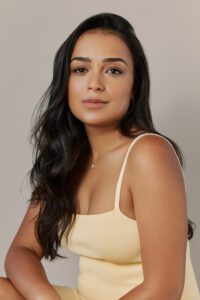
Nikita Waldron (she/her)
Nikita graduated from NIDA with a Bachelor of Fine Arts in Acting in 2017. Her theatre credits include: the upcoming Amber (The Old Fitz), Girls in Boys Cars (National Theatre of Parramatta), The Tenant of Wildfell Hall (Sydney Theatre Company), What the Ocean Said (Sydney Opera House), Rules for Living (Sydney Theatre Company), Kindness (Griffin Theatre), Lord of the Flies (Sydney Theatre Company), Mosquitoes (Sydney Theatre Company), The Wolves (Belvoir St Theatre), An Enemy of the People (Belvoir St Theatre), girl friend (Belvoir’s 25a) and Youth & Destination (KXT). Her feature film credits include The Bystander Trials, Palm Beach and Top End Wedding. Her TV credits include the upcoming Stan series He Had it Coming, Home and Away, The Letdown and Random and Whacky.
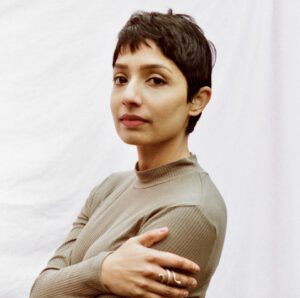
Vaishnavi Suryaprakash
Vaishnavi is an actor, dramaturg and Bharathnatyam dancer. Born in India and raised in south-west Sydney, she graduated from the National Institute of Dramatic Art with a BFA (Acting) in 2017.Vaishnavi’s theatre credits include Nayika: A Dancing Girl, Counting and Cracking (Sydney & UK Tour), Life of Galileo, and Sami in Paradise (Belvoir Theatre); Grand Horizons, White Pearl, and Julius Caesar (Sydney Theatre Company); What The Ocean Said (Sydney Opera House); Moby Dick (Sport for Jove); and Blue Christmas at KXT for New Ghosts Theatre.For her performance in Counting & Cracking, Vaishnavi received a Helpmann Award for Best Female Actor in a Supporting Role as “Young Radha”.
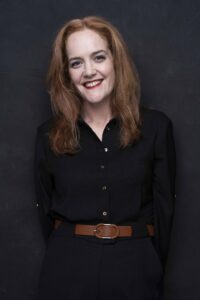
Claira Prider (she/her)
Claira Prider is an arts reviewer and actress based on Gadigal land. After receiving a Bachelor of Music in voice from the Elder Conservatorium, and Honours in classical singing from WAAPA, she found herself having to pivot away from her opera dream because of health challenges. Post disability diagnosis, she directs her passion for live performance and exceptional artistry into arts reviewing as well as pursuing screen acting secondary to her day job. Through writing for OutinPerth, Scenestr and Theatre Thoughts, she's been lucky enough to review countless worldclass performances, including productions by Opera Australia, Pinchgut Opera, Sydney Theatre Company and Belvoir Street Theatre Company. In a society that's not equipped to aptly or easily support artists with varying visible and invisible disabilities to the extent needed to be meaningfully involved in a performing capacity, she's passionate about participating in, reviewing and supporting productions that are accessible to the wider community of artists.
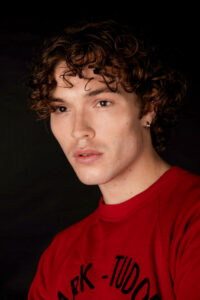
Fraser Morrison
Fraser Morrison is a Sydney-based actor hailing from the far north coast of NSW. He studied in a variety of skills across drama, dance and voice, before landing at École Philippe Gaulier in Paris to focus on clowning.He has since worked across Sydney’s prominent theatre companies including the Old Fitz (The Eisteddfod, How to Defend Yourself), KXT (Dumb Kids, Cherry Smoke, Natives), ATYP (The Resistance, M.Rock) and Darlinghurst Theatre Co. (Remembering Pirates). His screen highlights also include ‘The Last Days of the Space Age’ (Disney+), ‘The Family Law’ (SBS), and ‘Oi’ (CIMP Prod.) which premiered at MIFF. Fraser recently starred in the solo show ‘Cruise’ with Fruit Box theatre, which saw a sold out season at KXT and garnered rave reviews. He is currently in rehearsals for Belvoir’s ‘Grief is the Thing with Feathers’ which plays from the 26th of July to the 24th of June.
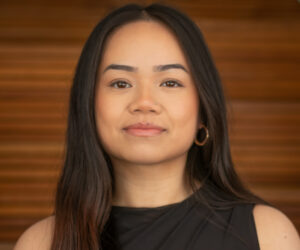
Eliza Soriano
Discovered amongst thousands of auditionees from an open call, Eliza is fresh from her professional debut with the original Australian company of Hadestown, playing Worker 1 and Eurydice.She is a proud Filipina-Australian who was born and raised in Melbourne and soon, she will be taking the stage at the Sydney Opera House with the cast of RENT!
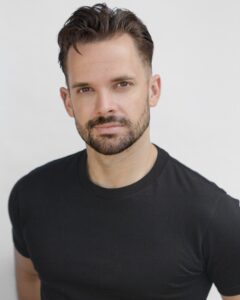
Simon Fairweather
Simon has worked as a performer and creative in many of Australia’s most loved musical theatre shows. He started dancing at a young age under the guidance of Suzanne Martin and trained at the Victorian College of theArts prior to making his Professional debut in 2005 at Tokyo DisneySea. Simon’s Music theatre credits include: Fender/Link cover, Hairspray (RCCL), Fred Casely/Dance Captain, Chicago (RCCL), Dance Captain, Saturday Night Fever (RCCL), Kingsmen Swing, King Kong: Live On Stage (Global Creatures), Ensemble/Cover Willie & Subway Ghost, Ghost: The Musical (GWB Entertainment), Dance Captain/Cover Brit, We Will Rock You (RCCL), Ensemble, Carmen (Opera Australia), Assistant Dance Captain, TheWedding Singer (David Venn Entertainment), Dance Captain/Swing, Hamilton (Michael Cassel Group), Ensemble/Cover Santiago, Moulin Rouge! The Musical (Global Creatures). Simon is a proudly a member of MEAA and represented by Random Management.
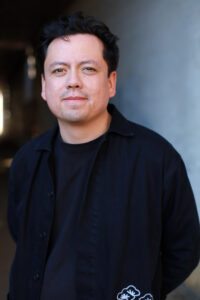
Jordan Shea
Jordan Shea is an award-winning writer, teacher and performer. Training at the VCA (Writing) and the University of Notre Dame (Theatre, English and Education), his work as a writer is highly regarded. Awards include: the Queensland Premier’s Drama Award 2025, the Philip Parsons Fellowship (Belvoir) and the Notre Dame Distinguished Alumni Award.His play They’re not listening won the Writing NSW Fellowship and was runner up for the Australian Theatre Festival’s New Play Award (NYC). His writing work includes: Malacañang Made Us (Queensland Theatre), Kasama Kita (Belvoir 25a), The House at Boundary Road, Liverpool (Old 505) One Hour No Oil (KXT/kwento – co writer), Ate Lovia (Red Line/kwento). He is the recipient of grants and funding from the Ian Potter Cultural Trust and Create NSW. Simon is a proudly a member of MEAA and represented by Random Management.

Anusha Thomas
Anusha Thomas is an actor, theatre-maker, and singer whose work spans stage, screen, and music. A qualified lawyer as well as a NIDA graduate, she brings both intellectual rigour and creative curiosity to her practice.Anusha was recently in the Australian production of Hamilton (Michael Cassel Group) as an onstage understudy for Eliza, Angelica, and Peggy/Maria. Her stage credits include a sold out season of The Lucky Country (Vidya Makan and Sonya Suares) The Dismissal (Squabbalogic), Metropolis (Hayes Theatre/Little Eggs Collective), The Lost Boys (Seymour Centre/Little Eggs Collective), and Aurat Raj (Belvoir 25A). She has also developed new works as a performer/devisor across multiple independent projects.
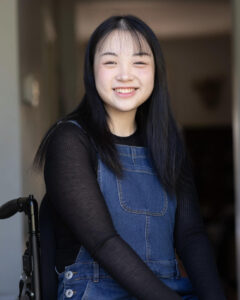
Brittany Goh
Brittany Goh is a 19-year-old performer, content creator and aspiring disability advocate living on unceded Gadigal Land. After moving to Australia from Aotearoa, New Zealand, she began training in singing, acting and dance, hoping to bring visibility to disabled performers in the Musical Theatre industry. Since moving to Sydney, she performed as Beth March (Alternate) in Little Women (Company of Dramatic Arts). Most recently, Brittany was accepted into the NIDA Diploma of Musical Theatre (Class of 2026), making her the first wheelchair user to be accepted into the program to study, and the first wheelchair user to begin studying a tertiary Musical Theatre program in the country. Brittany was also offered a place at Brent Street’s Diploma of Musical Theatre. As an autistic wheelchair user, Brittany strives to use her platform on social media to give hope to other aspiring disabled performers and raise awareness and understanding about disability, both in and out of the performing arts.